Showing posts with label News Review. Show all posts

Thursday, 11 March 2021

News Review (Editor’s Choice) History-Archaeology & Science - Health


History-Archaeology


RELIGION - CHRISTIANITY


Live Science


     “1,500-year-old 'Christ, born of Mary' inscription discovered in Israel

Thursday, 18 February 2021

News Review (Editor’s Choice) Climate Change, Atmospheric Science - Science Ecology and Sustainability


PLANET EARTH


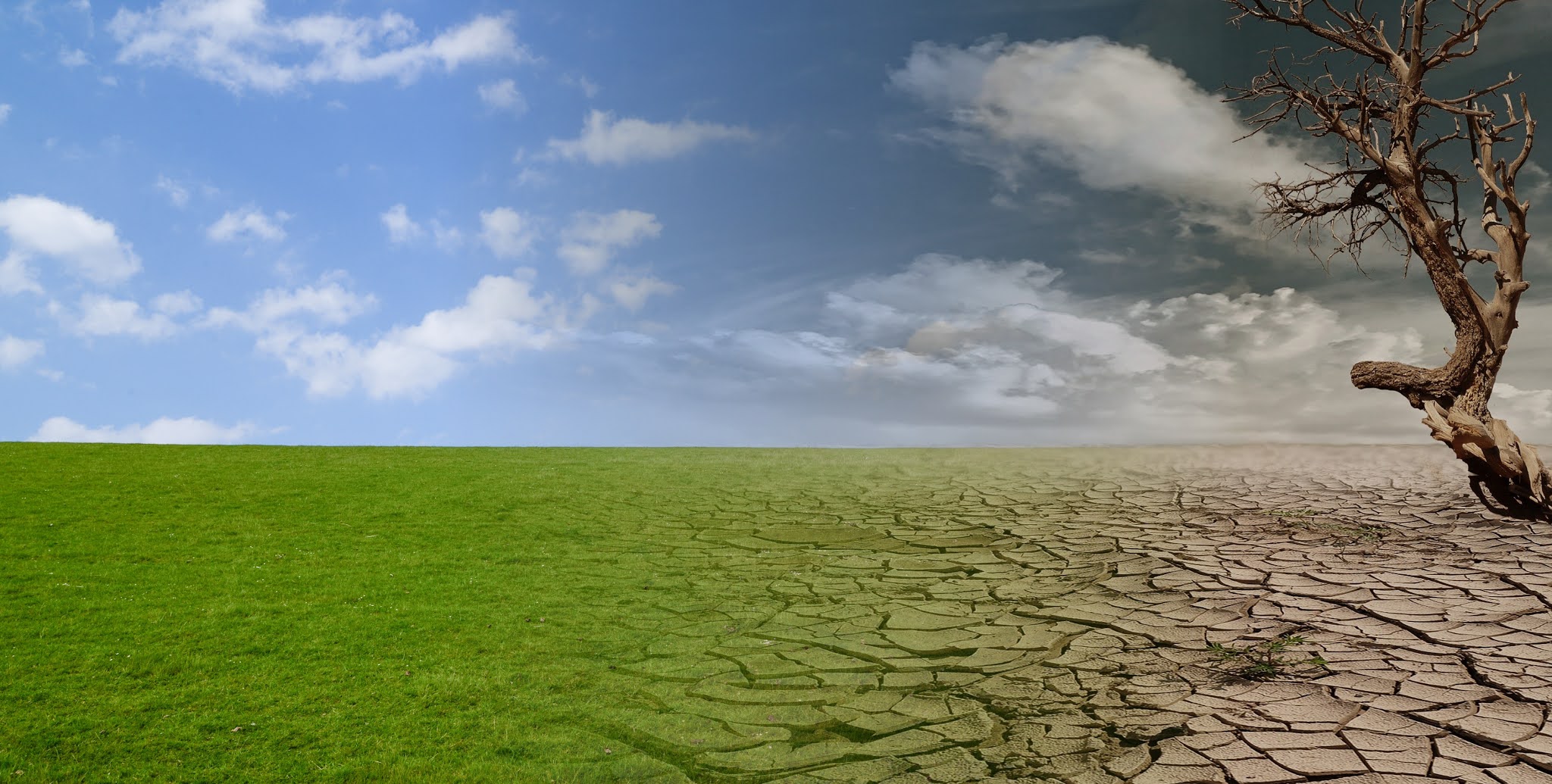
Credit: Image by Tumisu from Pixabay


CLIMATE CHANGE


Global Warming, the gradual heating of the planet’s surface, oceans and atmosphere


Global Warming will have far-reaching, long-lasting and, in many cases, devastating consequences for planet Earth in the foreseeable future.

Despite political controversy about climate change, already Global Warming is having a measurable effect on the planet. Profound and widespread, the consequences of Global Warming are real. 


The changes wrought by Global Warming


Increase in average temperatures and temperature extremes 

Extreme weather events 

Ice melts 

Sea levels and ocean acidification 

Plants - changing dates of activity 

Animals - shifting migration patterns 

Social effects – agricultural systems 


Humankind is responsible for nearly all Global Warming, ‘prevention before cure,’ are we doing enough?

Ignorance is neither an excuse and nor an answer .

Into the future, Global Warming update, what the statistics and trends are saying and the link between human activities and Global Warming. 


SciTechDaily – News 2021


     “Earth’s Global Warming Trend Continues: 2020 Tied for Warmest Year on Record


Credit: scitechdaily.com


2020 

 NASA Earth Observatory images by Joshua Stevens, based on data from the NASA Goddard Institute for Space Studies. Story derived from NASA and NOAA press releases by Michael Carlowicz. 


Earth’s global average surface temperature in 2020 tied with 2016 for the warmest year on record, according to an analysis by NASA.

Continuing the planet’s long-term warming trend, the globally averaged temperature in 2020 was 1.02 degrees Celsius (1.84 degrees Fahrenheit) warmer than the baseline 1951–1980 mean, according to scientists at NASA’s Goddard Institute for Space Studies (GISS). The year was slightly warmer than 2016 but within the margin of error of the analysis, making the years effectively tied.

“The last seven years have been the warmest seven years on record, typifying the ongoing and dramatic warming trend,” said GISS Director Gavin Schmidt. “Whether one year is a record or not is not really that important; the important things are long-term trends. With these trends, and as the human impact on the climate increases, we have to expect that records will continue to be broken.”

The map above depicts global temperature anomalies in 2020.”


"This is a direct citation" By NASA EARTH OBSERVATORY JANUARY 15, 2021. Read the full story, retrieved from https://scitechdaily.com/earths-global-warming-trend-continues-2020-tied-for-warmest-year-on-record/


Atmospheric Science and Science Ecology


SUSTAINABILITY


Earth’s atmospheric guardians, plant life doing their best to shield us. But can plant life sustain the temperature tipping point of human-caused carbon emission? How close are we to ‘breaking point’? The results are alarming.


SciTechDaily – News 2021


     “Alarming New Climate Research: Earth to Reach Critical Temperature Tipping Point in 20–30 Years


Graphic depicting the temperature tipping point at which Earth’s plants will start decreasing the amount of human-caused carbon emissions they can absorb. Credit: Victor O. Leshyk/Northern Arizona University


Earth’s ability to absorb nearly a third of human-caused carbon emissions through plants could be halved within the next two decades at the current rate of warming, according to a new study in Science Advances by researchers at Northern Arizona University, the Woodwell Climate Research Center and the University of Waikato, New Zealand. Using more than two decades of data from measurement towers in every major biome across the globe, the team identified a critical temperature tipping point beyond which plants’ ability to capture and store atmospheric carbon - a cumulative effect referred to as the “land carbon sink” - decreases as temperatures continue to rise.

The terrestrial biosphere - the activity of land plants and soil microbes - does much of Earth’s “breathing,” exchanging carbon dioxide and oxygen. Ecosystems across the globe pull in carbon dioxide through photosynthesis and release it back to the atmosphere via the respiration of microbes and plants. Over the past few decades, the biosphere has generally taken in more carbon than it has released, mitigating climate change.”


"This is a direct citation" by NORTHERN ARIZONA UNIVERSITY JANUARY 14, 2021. Read the full story, retrieved from https://scitechdaily.com/alarming-new-climate-research-earth-to-reach-critical-temperature-tipping-point-in-20-30-years/


Conservation Science


MASS DISTINCTION AND ENVIRONMENTAL POLLUTION


Without drastic intervention, the promise of a bleak future looks imminent unless humankind quickly commits to specific and long-lasting action (methods that promise results) against environmental pollution.


SciTechDaily – News 2021


“Humans Face a “Ghastly Future” Unless Extraordinary Action Is Taken Soon on Sustainability


Credit: scitechdaily.com

  
The global population could reach 10 billion by 2050; explosive population growth is contributing to a broad array of other challenges for the planet.

Global team of scientists, including UCLA’s Daniel Blumstein, points to environmental, population and political challenges.

Without immediate and drastic intervention, humans face a “ghastly future”  - including declining health, climate devastation, tens of millions of environmental migrants and more pandemics  - in the next several decades, according to an international team of 17 prominent scientists.

In a paper published today (January 13, 2021) in the journal Frontiers in Conservation Science, the researchers cite more than 150 scientific studies and conclude, “That we are already on the path of a sixth major extinction is now scientifically undeniable.”


"This is a direct citation" By UNIVERSITY OF CALIFORNIA - LOS ANGELES JANUARY 13, 2021. Read the full story, retrieved from https://scitechdaily.com/humans-face-a-ghastly-future-unless-extraordinary-action-is-taken-soon-on-sustainability/
Thursday, 4 February 2021

News Review (Editor’s Choice) Health, Earth and Ecology


WOMEN’S HEALTH


BREAST CANCER


Risk-reducing Strategy


It’s the most shared cancer Among Australian women, Breast Cancer. The best chance of surviving the disease is finding it early.

Awareness - The importance of Early Detection, what you should know.

Thursday, 21 January 2021

News Review (Editor’s Choice) – Archaeology, Natural History, Live Science, Life’s Little Mysteries


ARCHAEOLOGY


The Alphabet


The foundation of spoken language, the alphabet, is a human communication method (a set of letters in a static order used to represent the rudimentary set of speech sounds).


Hieroglyphs line the walls in a shrine to the goddess Hathor at Serabit el-Khadim. Credit: Courtesy Lydia Wilson

Thursday, 7 January 2021

News Review (Editor’s Choice) 2020 World News


Credit: Image by Gerd Altmann from Pixabay


Looking Back


HISTORY MAKING-MOMENTS


As we say farewell to 2020, here are just some of the significant events that have taken place over the year.

Thursday, 10 December 2020

News Review - Health (Editor's Choice) ABC TV and Discover Magazine


Ignorance Is Not A Satisfactory Excuse And Or Answer


The Upside of Downs. A brave, educational program which ‘touches a chord’ and challenged its TV Host's very existence.


ABC TV - LIVING WITH DOWN SYNDROME AND PRENATAL TESTING


Julia Hales and producer Kim Akhurst.(ABC TV)

"Actor Julia Hales, ABC's first TV host who is living with Down syndrome, explores the issue of prenatal testing in new documentary

Thursday, 3 December 2020

News Review (Editor's Choice) BBC - The World of Tomorrow


Communities, Travel, and our Natural Environment


An abundance of News from around the globe, staying abreast with current events and introducing The World of Tomorrow, a BBC Travel series that visits ingenious communities worldwide that are adapting to environmental change or finding new ways to live sustainably. 


A little sample of what you can expect to discover


The low-lying Maldives islands are threatened by rising ocean levels due to climate change (Credit: Matteo Colombo/Getty Images)


“A new island of hope rising from the Indian Ocean


     The modern island of Hulhumale is taking shape 8km off the north-east coast of Malé island in the Maldives in direct response to the threat posed by inexorably rising sea levels.

Thursday, 26 November 2020

News Review (Editor's Choice) Discovery Magazine and Smithsonian Magazine


An Important Leader In World History


When we think of history changers, leaders who left their permanent mark, for many Ghengis Khan, would be up there with some greats such as Alexander the Great, Jesus Christ, Plato, Augustus Ceasar, and Aristotle, and Mahatma Gandhi.

Known as the first great Khan, renowned for uniting many Northeast Asia nomadic tribes and launching the Mongol invasions that conquered most of Eurasia (as far west as Poland and the Middle East), he created the largest empire in history.

Paying Tribute and Acknowledging A Momentous Time In History


Thursday, 19 November 2020

News Review (Editor's Choice) Documentary - Netflix


From Australia to the UK, USA and around the World


Credit By SeaChangeProject - Own work, CC BY-SA 4.0,
https://commons.wikimedia.org/w/index.php?curid=93993491


The Underwater Chameleon – a great introduction to Octopuses (Cephalopods)


Did You Know?


The Octopus:


Can within a split second change colour and texture
The Coconut Octopus hides it’s a coconut shell that it carries around 
Possesses nine brains 
Has three hearts 
Has Blue Blood running through its veins 
Both male and female die soon after mating


My Octopus Teacher

(Netflix – Documentary Emmy nominee Craig Foster) 

Educational, moving, heart-wrenching, and an incredible watch

A unique glimpse into the extraordinary inner life of the octopus mind - Live underwater filming of an amazing friendship and bond between a human and wild animal.

Friday, 13 November 2020

News Review (Editor's Choice) National Geographic Magazine, Smithsonian Magazine and BBC News


SPACE EXPLORATION


An unknown frontier, full of mystery and wonder space travel has captured our imagination and never left our sight for decades. 

Science continues to cling to dreams of finding another planet capable of sustaining human life. 

Recently we celebrated man’s first walk on the Moon, fifty years ago, and the seductive temptress is luring us again.

As a new Era begins, follow Mankind’s endeavours to the Moon, from the beginning to what the future may hold.

Keeping us up to Date

Thursday, 5 November 2020

News Review (Editor's Choice) Smithsonian Magazine


Scientists May Have Identified a Previously Unknown Spit-Producing Organ in Our Heads


In addition to the newly discovered pair of glands, the human body has three more large sets and about 1,000 glands scattered throughout the mouth and throat. (Public domain via Wikimedia Commons).


We have been exploring the human body for centuries, searching for answers and cures for diseases that continue to plague mankind.

Through dedication and incredible research, no matter how many years pass, the field of medicine continues to make new discoveries.


KEEPING US UP TO DATE

Thursday, 29 October 2020

News Review (Editor's Choice) BBC


Is the future of travel underwater?

“Underwater tourism is opening the ocean up to travellers, offering them the chance to see the marine world that covers 70% of our planet.


                                                                                                                   Credit: Matiaz Slanic/Getty Images


The ocean is a saltwater body covering 70% of the globe's home to millions of plants and fish. It accounts for around 97% of our water supply, and we depend on it for our survival. Yet despite regular discoveries, still much remains unknown to us about this extraordinary and spectacular under world.

Around 80% of the ocean remains unchartered - unmapped and unexplored.

Is this about to change? ‘Small baby steps and a shift in thinking.’

Thursday, 22 October 2020

News Review (Editor's Choice) Smithsonian and BBC


“Ancient Egyptian Coffin
Opened for the First Time in 2,600 Years”

“The sarcophagus is one of 59 unearthed at the Saqqara necropolis in recent months.”


                                                                                                            Photo by Khaled Desouki/AFP via Getty Images

Egypt has long been a popular subject that has captivated us for centuries


I never seem to tire of hearing about this land's past wealth and the achievements of its ancient civilization.

Continuing not to disappoint us, once again, Egypt holds her arms wide open to bear more.

Smithsonian magazine reports on the latest discovery, “On Saturday, October 3, archaeologists from Egypt’s Ministry of Tourism and Antiquities opened a sealed, roughly 2,600-year-old sarcophagus as a crowd of onlookers watched in anticipation. Lifting the lid, the researchers revealed a mummy wrapped in ornate burial linen; more than two millennia after the individual’s interment, the cloth’s inscriptions and colorful designs remained intact.”

Scheduled to open in Giza in 2021, the anticipated great Egyptian Museum will host the sarcophagi and many other splendid findings.

But a small part of the story of the Saqqara necropolis and its bounty. 

Read more https://www.smithsonianmag.com/smart-news/archaeologists-discover-over-50-well-preserved-coffins-egypt-180976049

Credit story By Isis Davis-Marks,  SMITHSONIANMAG.COM, OCTOBER 13, 2020. Photo by Khaled Desouki/AFP via Getty Images.

About Isis Davis-Marks
Isis Davis-Marks is a freelance writer and artist based in New York City. Her work has also appeared in Artsy, the Columbia Journal, and elsewhere. Website: isisdavismarks.com
Read more from this author | Follow @IsisDavisMarks


“The Private Language of Venice”


                                                                                                                      Credit: Mint Images/Getty Images


Venice loved, adored, and a mirage of our fantasy and imagination


I don’t know about you, but when I think of Venice, it conjures up a myriad of thoughts and emotions. What comes to mind is romance, beauty, promiscuity, opulence, Venetian masks, lavish balls, gondola’s, guarded privacy (exclusivity), and mystery (including even a dark side, the perfect place to commit murder).

But there is so much more to beloved Venice.

BBC Travel reports, a beautiful story written by Robert Landon, removes much of the enigma attached to this small city surrounded by water.

‘A titbit to whet your appetite.’

“Although many travellers assume that the “authentic” Venice is long gone, the city still harbours the last remnants of a once-great civilisation, with its own language and customs.

Venetians have an uncanny ability to dodge, deflect, blend in, disappear in plain sight. Perhaps that's why so many travellers assume that “real” life in Venice was long ago trampled out of existence by hundreds of millions of tourist feet.

The truth is, the city still harbours an indigenous culture ­– the last remnant of a once-great civilisation, with its own language and customs. Yes, this way of life is endangered, but it is also very much alive. It’s just hard to detect with untrained eyes.”

Read more http://www.bbc.com/travel/story/20201013-the-private-language-of-venice

Credit story by Robert Langdon, BBC Travel, October 14, 2020. Image: Mint Images/Getty Images

Thursday, 15 October 2020

News Review (Editor's Choice) "CNN Answering the Call"


CNN call to earth


Nature and our environment mean a lot to me; if you feel the same way and haven't yet clicked on to CNN call to earth, I highly recommend checking it out.

In partnership with Rolex, CNN is committed to reporting on the environment challenges facing our planet, together with the solutions. Their goal is to drive awareness, action, and education around key issues, inspiring a blueprint for a more environmentally conscious life.

The site is highly entertaining and extremely informative, and the interactive videos are fabulous – exciting, and a great way to learn.

Once I logged on, I was riveted and hooked.

Here's just a little taster of what you can expect:

Sunday, 4 October 2020

News Review (Editor' Choice) "Earth Calling" & "Saving The Arctic"


Watch The Skies


The future, around the corner

Predicted to be soaring the sky in just 15 years away


Changing the face of aviation forever, Airbus has a bold plan. A space-age airplane destined to transform the world of flying.

Christened ZEROe, protecting our environment, she's a beauty to behold (eco-friendly - hydrogen-fuelled with a streamlined shape, her 'blended wing body' gives the onlooker the impression of "flying wings" – like that of a bird). 

Is the jet engine pollution bubble about to burst? - I hope so! Destined to carry 200 passengers, could ZEROe also possibly spearhead cheaper air flights into the future? Who knows, only time will tell?Keep an eye out.

Learn more... CNN https://edition.cnn.com/travel/article/airbus-zero-emissions-concept-plane/index.html “Why this space age airplane could change flying forever” (credit CNN) By Paul Silliers 3rd October 2020. An aviation journalist specializing in passenger experience and future air travel tech. Follow him at @paulsillers


Saving the Arctic


One way to combat climate change, a daring and bizarre proposal


Unconventional as it may sound, but then weirder things have worked, a new way to use Glass.
California-based non-profit Arctic Ice Project says scatter a thin layer of reflective glass powder over parts of the Arctic to protect it from the Sun's rays. 

The approach is Safe and Effective


When placing glass powder, reflective material on top of young ice during the summer months, the ice is provided with extra protection, allowing it to rebuild. Why is Glass seen to spearhead the material of choice? The settled on silica – or silicon dioxide – occurs naturally in most sand and is often used to make Glass. 

News to me, over the past decade, tests have been going on with encouraging results. 

What I do know is, vanishing rapidly through rising temperatures, the melting of sea ice has an impact far beyond the arctic. Loss in the arctic affects the globe. There is an urgency, and we must do something.

In my opinion, fantastic! Anything that saves our environment sounds good to me. If it works, think of the massive benefits for our planet, human life, and inhabitants included. Sounds good to me.

Learn more...BBC Future Planet. https://www.bbc.com/future/article/20200923-could-geoengineering-save-the-arctic-sea-ice?xtor=ES-213-[BBC%20Features%20Newsletter]-2020October2-[Future%7c+Button]
“The daring plan to save the Arctic ice with Glass” (credit BBC) By Katarina Zimmer 24th September 2020

Popular Posts